Easter Island

This is almost the remotest place on earth. 1500 miles of empty Pacific Ocean between here and, well, anywhere. Tristan da Cunha is the number one for isolation – it doesn’t even have an airport.

We flew in overnight from Papeete, arriving in the early morning, and I knew at once it was going to be like nowhere else I have ever visited. We stayed in a tiny but lovely – in a primitive way – b&b overlooking the huge rollers tumbling with surfers, rented a 4×4 and started exploring.

Easter Island is a World Heritage site, and not exactly unvisited even though it’s hard to get to and hugely expensive once you have managed the journey. So the tour minibuses roll up and disgorge visitors to photograph the maoi on their sacred ahu platforms – we followed suit and the first set of giant stone figures I saw, silhouetted against bare, low green hills, gave me that Mona Lisa moment. As when you stand in front of the real thing, having seen it a thousand times before in reproductions, and say to yourself, Uh, yep, that’s it. It’s satisfying, but it’s hard to ignore a niggle of anti-climax.

Briefly, then, the very best day we had was when we headed away from the buses and the archaeologically restored sites to follow a faint track around the island’s deserted north coast, from the bay of Anakena where the two canoes from an unknown Polynesian destination arrived about 1300 years ago and human colonisation of Rapa Nui began. It’s fifteen miles from Anakena back to Hanga Roa, the island’s only ‘town’. Town has electricity and piped water – nowhere else does. Apart, probably, from the extremely upmarket ‘adventure’ destination of Explora, hidden somewhere inland, catering for very rich people who don’t want their feet to touch the ground.

In a whole day’s walking we saw no one, and only one remote farm building, apparently deserted. The sense of wilderness was absolute. The bleached bones of wild horses lie where they had fallen. The sea is navy blue, the cliffs busy with seabirds. And everywhere we walked we were stepping over ruined villages. Sometime in the eighteenth century, the Rapanui civilisation catastrophically fell apart. For centuries these isolated tribes had dedicated their lives to ancestor worship, carving and erecting immense statues of their dead, but the natural resources of their paradise were running out and they had come to the brink of starvation. As far as scientists can tell, tribal warfare broke out and the hundreds of maoi that had stood watch over the villages were all pushed over, so their eyes blinded by earth instead of gazing to the horizon. In time, the surviving people were carried off in Peruvian slave ships. Only fifteen ever came back.

FullSizeRender[1]IMG_3275FullSizeRenderEuropean explorers arrived, of course, and eventually the archaeologists and anthropologists trailing their theories. As a teenager I read and was fascinated by Thor Heyerdal’s persuasive stories. Some of the maoi were pieced together, bodies and heads and their proud red rock hats or topknots, and were hoisted once again on to the ahu altars. The villages were partly excavated and restored so visitors can marvel at the long-gone boat-shaped houses, even their underground chicken coops. It’s all intriguing and impressive, but our walk through the untouched ruins of the windswept north coast outstripped all this.

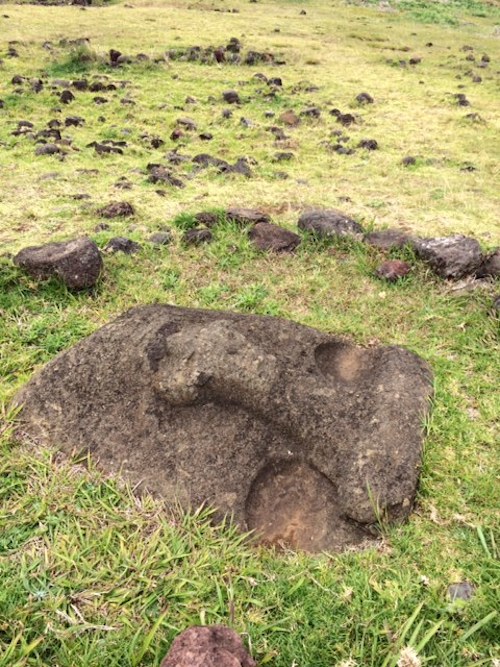
We passed upturned faces, seeming to smile at the sky. We stepped around decapitated torsos and giant heads, and great topknots that had rolled away to rest in thickets of grass. There were the neat cobbled platforms, with wild horses roaming across them, and the heaps of stones that had once sheltered tribal chiefs. To me, the lost people felt much closer and more real than in the tidy display sites.

Once the Rapanui had an elegant script that has still not been deciphered, and a sophisticated society and belief system. Above all they had the ability to quarry rock and carve statues of breathtaking size and mysterious power, and then to transport the huge finished pieces across the island and to set them upright. On another day we visited the quarry at Rano Raraku where all the soft rock for the statues was excavated. The statues were carved on their backs, faces first, and chipped away from the sides until they rested on a keel. When the fronts were complete the keel was broken and the statue tipped upright to stand in a pit so the back detailing could be completed. Then somehow they were hoisted and trundled to their village standing point. The quarry still contains nearly 400 maoi, partly completed, as if the work just stopped…one day…and completely abandoned. All this was achieved without metal – the island is volcanic – without the wheel, even without pottery. It defies comprehension, really. My breath is still taken away.

The day of the Anakena walk happened to be my birthday.

It won’t be forgotten.
Tahiti, no Gauguin

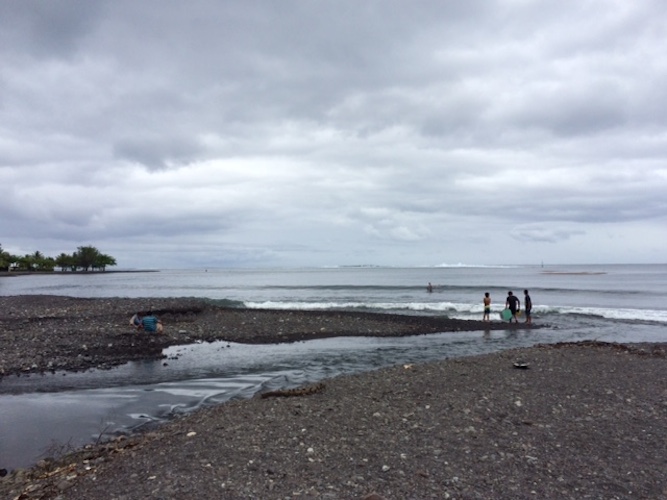
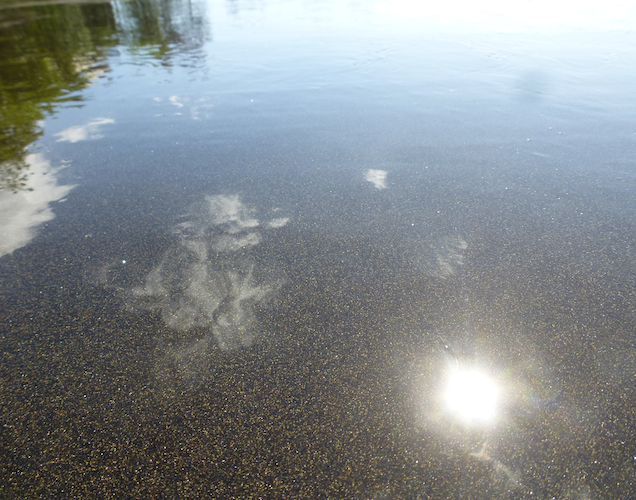
Almost the best thing about Tahiti was the volcanic sand, the colour of dark chocolate densely flecked with gold and bronze. When the tide oozed over the flats it was as black as thick oil spreading, and when it tugged away from the pumice shingle it broke up into tiny vees of silver. A better photographer than I am might have been able to capture it. The crabs were black too, and scattering away from my footprints they looked alarmingly like tarantulas.

Tahiti black sand

I felt tired here, after four weeks of travelling, so for a lot of the time I sat and looked at the sea and the backdrop of thick, tropical vegetation. After long days of rain the cloud suddenly lifted and we had two days of brilliant sunshine. Banana palms and the gorgeous fans of traveller palms steamed in the heat and frangipani blooms scattered on the steps to the apartment. It would have been ideal to look at some art, but the Musée Paul Gauguin has been closed for two years due to lack of funds. We explored the lush botanic gardens at Mateiea instead and then drove on to Tahiti iti, the handle of the island’s saucepan shape, to admire the famous surf beach at Teahupoo. Surf was not up. Under heavy grey skies the scene was more North Sea than Polynesia. We retreated to a surfers’ caff and had a plate of chips and beer for lunch.

Tahiti

We’re now packing to move on yet again. As always, I’m wondering vaguely if I have done Tahiti justice, if I ‘got’ it, whatever it may be. Maybe it’s the traveller’s/writer’s disease to feel uneasy, to have a sixth sense that the perfect scene was unfolding just over the next headland, and I missed it.

Meanwhile, the chef d’activités from the hotel next door is chivvying a group of chic French ladies through their aquabike session in the swimming pool. ‘Un, deux, trois, plus fort….et voilàaaa… ‘

I’ve never seen this before, sitting shoulder deep in water and pedalling like mad on a plastic bike. Needless to say, the up-dos remain immaculate and the (new, Tahitian, black pearl) earrings are all in place. I shouldn’t have been surprised, this is French Polynesia after all, but from the voices and the outfits we could easily be in St Trop.


Paradise islands

The major concern about travel blogging is not what to write, or even how to write it, but what to do with the paragraphs once they are written. The pinwheel turns, and turns and turns, but there is no following whoosh.

Not sent. Wifi is down again, or else the internet is flickering like a candle in a typhoon. I wonder how that guy watching a movie on his tablet in the lift in Seoul – or was it Hong Kong – would deal with such fragility? It really doesn’t matter whether I post these words tonight or next week, but it does remind me yet again that my work, my relationships, even my ability to check with an airline whether I have a ticket to fly, all depend on this laptop and its links with the ether.

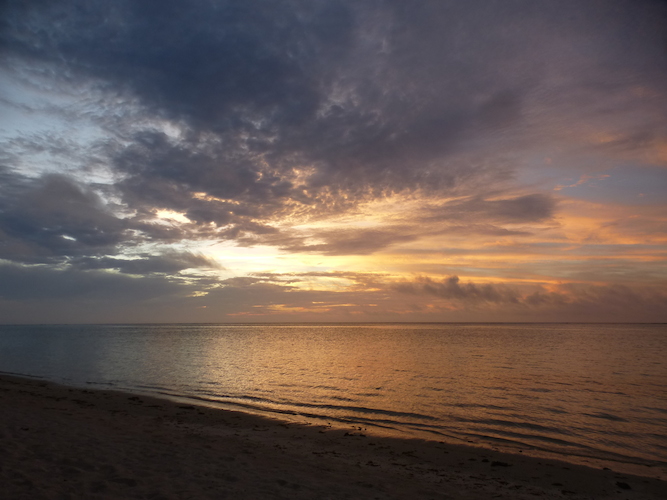
Cook Islands sunsetSince leaving Auckland nearly two weeks ago we have been in the Cook Islands. I am now on Aitutaki, the second largest island in the southern group, writing this on the terrace of the darkened bungalow. The crickets and geckoes are hard at it, and so are the no-see-ums. There are two mosquito coils burning beside my ankles. Rain is dripping off the palm thatch. I can hear the surf on the reef that encloses the lagoon.

This little blip in the Pacific Ocean is perhaps 5 km long and 2 wide. An easy bike ride encircles it, not all on metalled road. Glossy hens and their chickens peck at the floor of the miniature airport, the lagoon glimmers turquoise when the sun appears. The highest point, a wooded hummock that you could hardly call a peak, lies about 200m above sea level.

The islands’ economy seems shaky, being heavily dependent on New Zealand, and there is visible poverty if you look beyond the pizza shacks and pareo sellers lining the coast road. The main industry is tourism but it’s not that tourist-friendly. Shops and businesses all close for the day at 4pm, and even the hotel restaurants are emptying by 8 in the evening.

It’s hard to get anyone to say yes, whatever the question.

‘You can’t get the staff for longer opening hours’, sighed the owner of the best café on Rarotonga, the main island. ‘Island people don’t want to work’.

In such an idyllic setting, with generations of forebears who could simply hook a fish out of the sea or pull a pawpaw or a coconut off a tree, who would have waiting tables or making beds in their blood? But everything has changed here, as the huge planes lumbering in from Auckland and LA daily indicate.

Tomorrow we will take the tiny Air Rarotonga 40-minute flight back to the main island.

And from there, onwards.

If I can confirm my plane ticket.

Otherwise I might just have to stay.

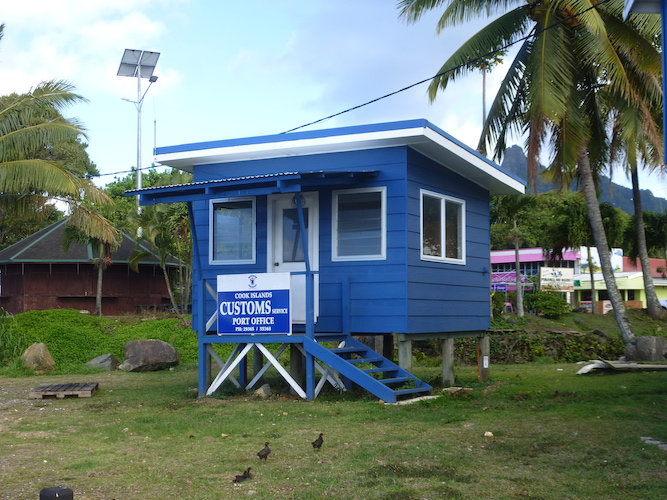
Cook Islands customs


Good and bad in Seoul

In Seoul we stayed in a tiny studio flat fourteen floors above the railway tracks snaking out of Seoul Station. Approximately the same distance below street level, the bullet-fast new subway trains zoom out to Incheon Airport. And in between these poles spreads a vast neon-lit city of white skyscraper blocks interspersed with tropical wooded hills. Of the glittering Asian cities we passed through, Seoul is the best. It avoids the catastrophic traffic of Beijing and the ruthless materialism of Hong Kong. It simply works, with cheerful efficiency, and it is not hard to see why it is home to the second biggest economy in Asia.

P1020544

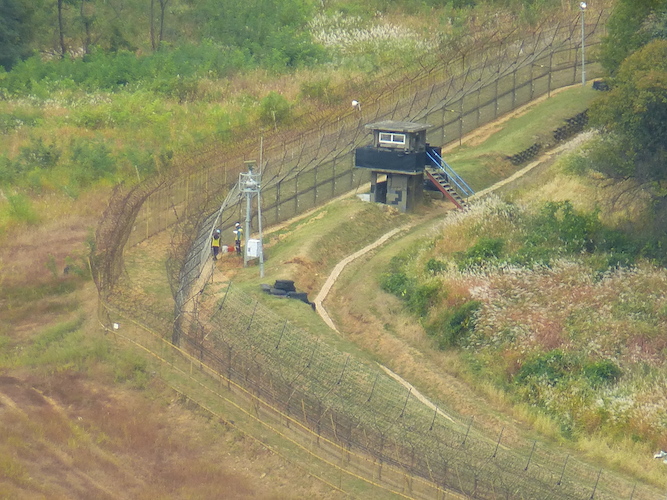
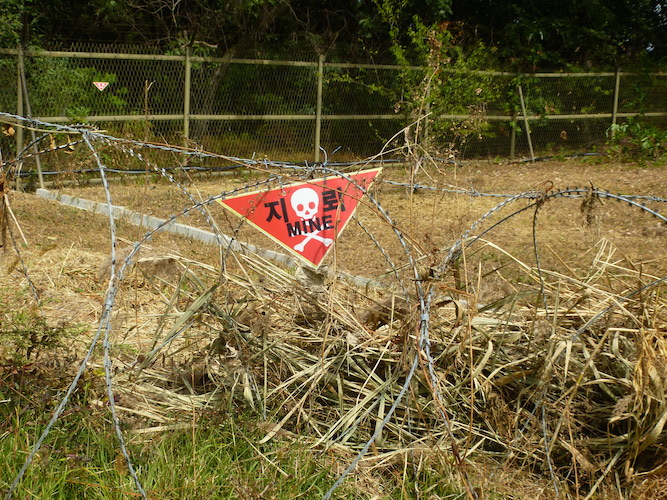
Apart from touring the Royal Palaces (poignant, respectfully preserved) and going up the N Seoul Tower, we did just one tourist excursion. Apparently only Europeans have any interest in this one – the Chinese, Japanese and Singaporeans visit exclusively for the shopping (see below….). It was a guided bus trip up to the DMZ – the 3-kilometre wide de-militarised strip between South and North that slices straight across the Korean peninsula. It was fascinating, and deeply weird that this dividing line is treated as a visitor attraction, apparently by both sides. First we toured the eerily deserted Dorasan train station that will – some day – be not the last stop on the line up from the south but the first on the journey north. Until that happy day the departure boards show only one destination, Pyongyang, with no times or dates ventured. Next we put our coins in the slots of the powerful observation telescopes and trained them on the barbed wire and gun posts three kilometres away, and on the settlement just north of the line that S Koreans call Propaganda Village. The houses look solid and the fields well tended, although it’s said that no one actually lives there. The lights all go on at the same time every night. In the zone separating the barbed-wire lines, nothing stirs. It’s too heavily mined for anyone to venture into, although several species of otherwise endangered birds and mammals thrive amongst the tangled vegetation.

P1020555

The culmination of the trip was an underground excursion into one of the three spy tunnels penetrating under the DMZ – dug by the north and discovered before any invasion of the south could be launched. We put on hard hats and hunched over to descend several hundred metres of steep rocky tunnel. At the bottom was a heavily barred door, through a slit in which another armoured door could be glimpsed three metres away. Beyond the second door lies a third, we were told – the closed gateway to the armoured north. It was cold, claustrophobic, and deeply creepy. No hardship at all to turn tail and make the panting ascent to the sunshine once more.

Our little apartment lay just across the 6-lane highway from a giant shopping mall, housing outlets for every brand from Adidas to Zara. The football-pitch acreage of its food store was open 24 hours, so we were able to browse the sushi or salad aisles at 3 a.m. Not that we needed to. Food and restaurants are big in Korea. HUGE. I had plenty of kimchi, thanks.

P1020640

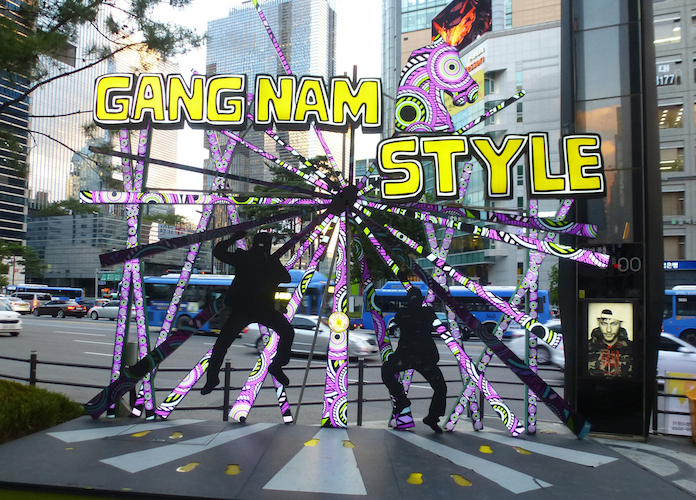
And that shopping? There are more and bigger and shinier malls than I have ever seen. It was hard to credit that so many designer handbags, pairs of sunglasses and cosmetics displays could be collected in one city. I bought nothing, save a carrier bag in one of the street markets. There is such a thing as too much choice.

My favourite time in all Seoul was discovered in a seedy block five minutes’ walk from ours, under a neon sign saying ‘Silloam Spa’. It might have been a love hotel or even a brothel, but in fact it was five floors of heaven. The Koreans adore a spa, and so do I. Although the interior décor was brown plastic and fake foliage it was sparklingly clean, a labyrinth of miraculous sauna chambers offering heat and chill and pumped-oxygen or charcoal-filtered air, and jade fountains and heated clay beds, rest rooms and jacuzzi pools and even dormitories on the top floor where you can sleep overnight if you wish. I had the best non-sleazy massage of my life, and found the segregated women’s areas nakedly relaxed and even sisterly. (Not a word I often reach for.) All this, for a maximum stay of 12 hours, for $8.

Five days in Korea was far too short. I didn’t even get to Nami Island, let alone down to Busan or the east or west seas. Must come back again, soon.